
 Azeem İbrahim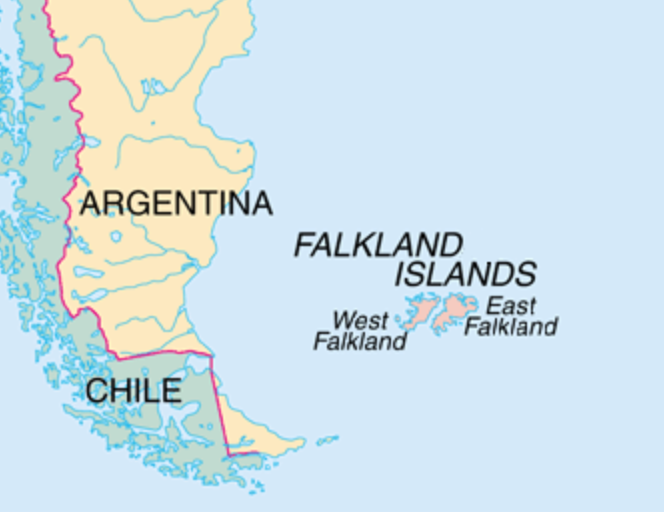

The United States would gain nothing by betraying one of its oldest allies and rewarding Argentina’s aggression.
President Donald Trump’s frustration with NATO allies is understandable. But turning that irritation into a review of America’s long-standing diplomatic backing for the United Kingdom’s sovereignty over the Falkland Islands would be a serious strategic mistake—one that rewards Argentinian revanchism, undermines a vital ally, and ignores hard military realities on the ground.
A leaked Department of Defense memo floated the idea of reassessing US policy toward the Falklands as leverage against London and other NATO partners who have balked at joining US operations in the Strait of Hormuz. Argentinian President Javier Milei—Trump’s ideological soulmate on free markets and anti-socialism—has seized the moment. In recent days, he has declared the Falklands (or “Malvinas”) “were, are, and always will be Argentine” and insisted his government is “doing everything humanly possible” to reclaim them, while promising to proceed “judiciously, with brains.” President Milei even used the April 2 anniversary of the 1982 war to ramp up the rhetoric.
For the United States, this is the wrong fight at the wrong time.
Imagine if a foreign power suddenly questioned America’s sovereign claims to Alaska or Hawaii. Alaskans and Hawaiians—American citizens by choice and history—would rightly see it as an outrageous assault on self-determination and US territorial integrity. The Falklands are as British as Texas is American. The islanders speak English, play cricket, drive on the left side of the road, and fly the Union Jack with pride. They are not Argentinian, and never will be.
In a 2013 referendum, 99.8 percent voted to remain a British Overseas Territory. That is self-determination in its purest form—the very principle the United States has championed from the founding of the Republic through presidents from Woodrow Wilson to Ronald Reagan. Handing the islands to Buenos Aires against the expressed will of the people who live there would betray that principle and set a dangerous precedent across the Western Hemisphere, including for America’s own overseas territories and states.
The UK is not asking Washington to send troops to defend the Falklands. It is simply asking the United States to continue the policy that has served both nations well for generations: recognizing UK administration of the islands while maintaining formal neutrality on the underlying sovereignty dispute. That stance helped deter conflict in the past. Reversing it now, even as a bargaining chip, would signal to the world that America is willing to trade away allied territory to settle scores inside NATO.
More importantly, any Argentinian attempt to seize the Falklands by force would be far bloodier—and far more likely to fail—than the 1982 invasion. The islands are no longer the lightly defended outpost they were 44 years ago. Today, they host a substantial, well-armed British Army garrison supported by the Royal Air Force’s Typhoon FGR4 fighter jets permanently based at Mount Pleasant.
The outdated Rapier air-defense system has been replaced by the formidable Sky Sabre, a modern surface-to-air missile battery equipped with CAMM missiles and Giraffe radars, capable of engaging aircraft, drones, and incoming munitions at ranges of 25–45 kilometers (16–28 miles). Royal Navy patrol vessels provide additional coverage, and the United Kingdom maintains clear plans for rapid air and sea reinforcement.
That extensive defense architecture did not exist in 1982. Argentina’s military, while still capable, is in no position to overcome an integrated air-defense network and garrison without catastrophic losses. A failed assault would drag both nations into a costly conflict, destabilize the South Atlantic, and force the United States into an even more awkward position—either watching a close ally bleed or intervening on the UK’s behalf after having signaled weakness.
Milei is right to modernize Argentina’s economy and reject a ruinous Peronist economic legacy. But reviving 19th-century territorial claims at the expense of a people’s right to self-determination is not “judicious.” It is the same nationalist impulse that led to the original disaster in 1982. Washington should encourage Buenos Aires to focus on the prosperity its president has delivered elsewhere, not on an island chain whose residents have repeatedly and overwhelmingly chosen to remain UK citizens.
The US-UK special relationship has endured for a reason. It rests on shared values, complementary strategic interests from the North Atlantic to the South Pacific, and mutual respect for the principle that free people get to decide their own future. President Trump has repeatedly shown he understands the value of strong alliances when they serve American interests. Standing by the United Kingdom on the Falklands is one of those moments. The Pentagon should shelve any review of the islands’ status, reaffirm the long-standing US position, and keep the focus where it belongs: on deterring real adversaries, not testing the loyalty of our closest friends.
Dr. Azeem Ibrahim OBE is the chief strategy officer at the New Lines Institute for Strategy and Policy and author of A Greater Britain: Rethinking UK Grand Strategy and Statecraft (Biteback:2026). He served as a reservist in the 4th Battalion, Parachute Regiment of the British Army.
Source: https://nationalinterest.org/feature/why-donald-trump-must-stand-by-the-uk-on-the-falkland-islands