

 Taha Özhan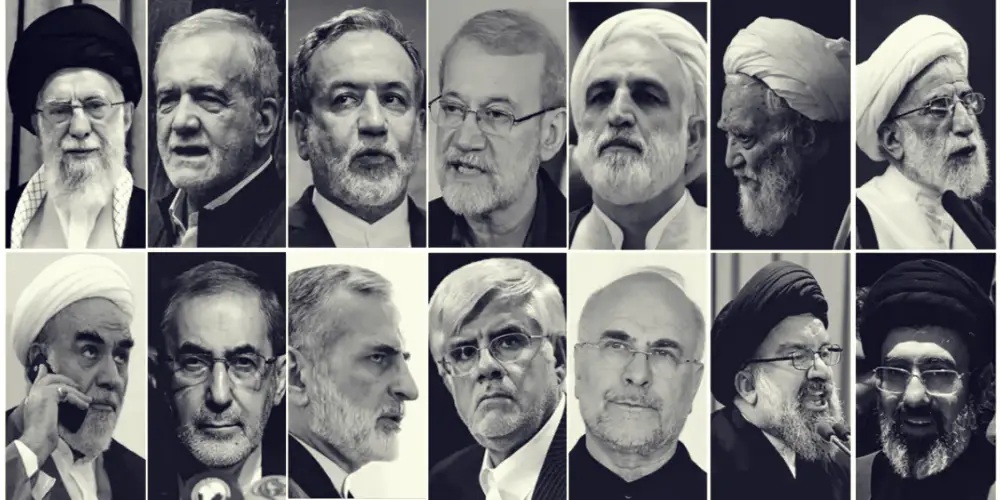

“The question of who governs Iran” is not merely an issue that emerged from the heavy initial toll of the war launched by the United States and Israel against Tehran through assassinations on February 28. Nor is it a problem that came to the fore with the killing of Larijani, the head of Iran’s National Security Council. On the contrary, it is actually a crisis that peaked, or was named, after Larijani effectively began ruling the country following the attacks on Iran in June 2025. Indeed, the history of “the question who governs Iran” can, if desired, be traced back to 2005 through various arguments. Moreover, the existence of this aforementioned question can also be identified in the governing system, which operates within a complex web of issues in the sense of “ultimate will” after the revolution. However, when we analyze the situation by situating it within the history of the ongoing acute crisis, “the question of who governs the country” has, in the most general sense, been an issue that has been at its peak for nearly two years, starting from the post-Raisi period.
After the June 2025 attacks, the Iranian system, which painfully brought this question into existence, did not even consider approaches that would derive legitimacy from the people; instead, it once again displayed a para-state reflex and positioned Larijani as a “de facto leader.” This development was not due solely to the fact that Pezeshkian was personally a weak figure lacking charisma and willpower. Indeed, Pezeshkian emerged from ballot boxes that were kept open until late at night to boost turnout, yet failed to attract even half of the electorate. Receiving only 17 percent of the total electorate in the first round, Pezeshkian was elected president through a mathematical outcome (reaching a runoff for the first time in 20 years) without possessing even a minimally acceptable level of social legitimacy. If Saeed Jalili, Pezeshkian’s opponent in the election and the Supreme Leader’s (Veli-yi Faqih) representative in Iran’s National Security Council, is appointed to replace Larijani, the political chaos will continue in a new form. Jalili is not someone who can fill the void left by Larijani. After all, for years he has stood out merely as the representative of one faction. Larijani, by contrast, was someone who managed, to a certain extent, to maintain a “balance” among various centers of tutelage operating in deep mutual distrust. Now, it is likely that with Jalili or another figure, Iran’s system will lose even this function.
This in fact shows that even those who hold power in Iran have been unable to resolve the question of who governs the country. If the Supreme Leader (Veli-yi Faqih) truly stands at the head of the system, why is there a need for a de facto executive figure of the kind typically found in organizations? If the president has legitimacy derived from elections, why does this not translate into usable political capital? At this stage, the ability of the military tutelage system to govern the country through any single guardian has also significantly diminished. It is evident that the complex layers, parallel structures, proxy powers, and guardians that constitute the system have failed to produce the comprehensive defense mechanism that was anticipated in the face of a hot war and an existential crisis. Yes, that’s true; horizontal and cluster-type organization and power distribution simultaneously create a serious defense against external attacks and become a source of chaos. Iran’s only struggle at this point is not merely to cope militarily with U.S.-Israeli aggression. Tehran’s real struggle is to govern a country of 90 million people in all its dimensions.
In essence, the clichéd distinction between “conservatives” and “reformists” stems from the tension between those who seek to wield power within privileged spheres of influence within the system and those who strive to find solutions to the Iranian problem, which needs to be addressed. While Larijani, with his many past stances and preferences, was focused on the must-be-managed Iran issue, those who preserved their privileged positions within the system were preoccupied with managing the security sector, the rentier economy, or the judiciary. It is precisely for this reason that the relationship between those who try to “govern themselves” and “the people waiting to be governed” has become increasingly thin and broken over the years, as evidenced by elections.
Shadow Leadership and Systemic Deadlock
An important point to note here is that, particularly in recent years, as systemic calcification reached its terminal stage, there were attempts to overcome the deadlock involving certain figures within the power matrix. The effort itself was a result of a greater understanding of the harsh reality within Iran, yet largely an attempt by outsiders, somewhat desperately, to interpret Iranian policies through the lens of largely unelected figures. Because with no apparent willpower, authority, or legitimate name(s) governing Iran visible, the search for the “true authority in Iran” continued, culminating in a cult of personality, often accompanied by enigmatic titles like “Shadow Commander” (first reported in The New Yorker).
It was assumed that through Soleimani, Iran managed a subtle and deeply embedded regional balance of power; that through Larijani, coordination among parallel structures within the country was ensured; that Khamenei firmly controlled the system; and that certain individuals handled critical regional and global dossiers. In reality, however, the main dynamic elevating these figures was the systemic deadlock itself. Indeed, they failed to achieve any serious or lasting breakthroughs in the Riyadh–Tehran rapprochement, relations with China or Russia, or the nuclear file from which they could not extricate themselves. Similarly, what they believed they gained from investing in proxy wars was not lasting results beneficial to Tehran, but rather the exploitation of temporary spaces created by other actors in those regions for various reasons. As those avenues closed, opportunities turned into risks, and gains became burdens. Instead of confronting this painful reality, they preferred to explain the systemic collapse with, for example, the absence of Soleimani.
February 28: A Historical Turning Point in Iranian Politics
Prior to February 28th, Iran, in its world of perfect (international, regional, and national) isolation, was able to manage these problems. It had developed hybrid mechanisms to manage the heavy cost of the political vicious cycle it was adopted, within a world of authoritarian governance, regional tension, and international sanctions. By focusing more on “who shouldn’t govern” rather than “who should govern” Iran, and by relying on the heightened pain threshold that had formed over a century, the country was able to weather its pains. However, February 28 marks a structural rupture in modern Iranian political history. Coincidentally, just as the same date (February 28th/February 28 post-modern military coup in Türkiye) that went unnoticed in Türkiye but actually opened the door to the end of the 20th century for Türkiye, Iran may also have reached the beginning of the end of its own 20th century. Beyond centuries of bilateral relations, alignments, and wars, the comparative histories of Türkiye and Iran, two countries that experienced the crises of the 20th century not so differently in nature and are trying to complete their century amidst a similar tragedy of modernization, tell us much more than we might imagine.
Therefore, for Iran, February 28 could represent an extremely costly rupture that will allow it to close its unfinished 20th century, a century shaped by the period from the Constitutional Revolution to the bombing of the parliament, from Mossadegh, who nationalized oil, being sacrificed to an American-British coup, to the Iranian Revolution, and from the Iraq War to the post-9/11 era. This means that change in Iran is inevitable. And this change has nothing to do with the “regime change” that the Iranian establishment, the West, or regional actors envision.
Neither America and Europe, nor the Israel-Gulf axis which is experiencing an existential crisis with Tehran, have any particular interest in what kind of government is in power in Iran or in the relationship between that government and its people. The only issue they care about is Iran’s relationship with them. This knot is also at the heart of Iran’s solution. When the West, Israel, and the Gulf speak of “regime change” in Iran, what they actually mean is a change in the regime of “relations with themselves”. The choice facing Iran begins precisely here. It is inevitable that Tehran, after a few weeks of fighting, is acutely aware of the limitations of both its own capabilities and its regional and global standing. Within these constrained means and environment, Iran has very little room for maneuver. While in such a dire situation, the absence of a clear authority with genuine legitimacy to govern the country constitutes an even greater crisis than all these difficulties.
Furthermore, in the war that has been ongoing since February 28th, Iran’s defense is sufficient to demonstrate, without needing any further explanation, the crisis in its governance. Armed forces structured and authorized in a decentralized, organization-like manner have been unable to produce a comprehensive and phased response to what appears to be aimless and strategy-deficient American aggression. At a time when America is looking for a NATO pretext, the missiles directed at Incirlik and the unstrategic attacks launched against the Gulf where American bases are located cannot be seen merely as desperate and inevitable responses within the logic of conflict to the raging war waged against Tehran. On the contrary, the absence of a central political will, and the purely military-tactical approach lacking coherence and a refined decision-making mechanism, should be interpreted as a governance crisis that seriously hinders Tehran’s political goals and the stages it will develop while continuing the war. A leadership crisis following June, characterized by a guerrilla-style dispersal of the army and defense capabilities across the country, the appointment of backup figures in anticipation of leadership losses, but lacking a strategy that transcended this tactical maneuver: a stalemate that failed to maintain its central leadership even after the initial assassination.
At this point, it does not appear possible for Iran to resolve its governance problem through reflexes that transform it into a para-state. The repeated assassination of its leadership and the response that “successors are ready” constitute not a strategic but an organizational, tactical reaction. At this point, Iran’s continued loss of leadership in such a humiliating manner means it can neither manage the situation organizationally nor can the country handle this crisis with a leader who has transformed into a ‘Gaib Imam’ (the Imam in divine occultation/Hidden Imam). Moreover, in today’s Iran, history, mythology, and sectarian identity that exhausted from being consumed as instruments of power, are now confronting a force not entirely different in nature. Considering Evangelicals in the United States and Zionists in Israel, it is not unreasonable to suggest that this conflict also contains elements of a “clash of three messianisms,” which helps explain why it is difficult to identify a clear rationale for why this war began. Therefore, Tehran must recognize that the adversaries it faces today are unlikely to demonstrate the strategic patience and rationality that characterized some of the actors it confronted in the region after 9/11.
Iran’s Two Ways Out
These days, almost everyone speaks of a single way out for Iran. In fact, it is repeatedly argued that not only for Iran but also for the United States, Israel, and the Gulf, the only exit is ending the war. It is assumed that the war is evolving in a way that could deliver some form of victory to all parties. However, we have no coherent analytical basis for how the United States and Israel intend to end the war. Because an actor who wants to end a war in a planned way, or even expects it to end naturally at some point, would not surrender to Israel’s world of assassinations. Nor does it continue a war that will directly determine the fate of a people, an entire region, and global balances through immature and brazen cinematic rhetoric. Therefore, predicting when and how the Washington door, Iran’s first exit, will open is now an impossible task. The instability in energy supply and prices, which is expected to extinguish the resulting fire, could also mean that red lines have been crossed following the March 19 attacks. Yet despite all this, within Trump’s inconsistent world, the war could also end within days.
If we set these projections aside for a moment, Iran also has an internal way out. This path could simultaneously answer the question of who governs Iran. In Iran, there is no vacancy in the seats of governance. The office of the Supreme Leadership (Velayet-i Faqih) is occupied, and there is a Supreme Leader (Veli-yi Faqih). The presidency is likewise filled. The councils that operate the tutelary system remain in place. There is an elected parliament and its speaker. Despite assassinations, each deceased figure has been replaced with new appointments. Yet despite all these positions being filled, Iran appears to be in a state of void. It fails to convey to either its own people or the world the feeling that this is the exact willpower that governs the country.
There is only one way for Iran both to conclude the war at a relatively manageable cost and in a geopolitically advantageous position, and subsequently to demonstrate the willpower to rebuild its nearly devastated economy, state institutions, defense, and, most importantly, its social fabric. This path requires the emergence of a governing authority that truly leads Iran. It is now understood that the current cadres in Tehran are incapable of demonstrating such leadership. Nor is it possible for the existing leadership to manage the political and social crisis this situation has produced. Larijani could have emerged at precisely this point as an experienced figure capable of managing the crisis. Moreover, since the summer of 2025, he had been granted de facto leadership authority directly by Khamenei to perform this function. However, it has once again been demonstrated that an unelected figure can at best manage an organization, or that appointments can at most activate bureaucratic functions.
Today, it is clear that no force other than an elected authority can pull Iran out of the crisis it faces. However, it will not be easy for the Iranian security establishment, which has been operating within its own economic, political, and power structure for over 40 years, to see or understand this situation and take action. In this crisis environment, while Iran most needs “legitimacy” they fastened the first button incorrectly by reviving the hereditary transfer of power from father to son, something that last happened in Iran 85 years ago. Despite this lapse in judgment, the harsh geopolitical reality will continue to exert pressure to bring forth a governing authority in Iran.
After Khomeini’s death, the Iranian system was able to demonstrate significant pragmatism. In the uncertainty of 1989, political actors sought a way out; the constitution was amended, and a new leadership structure was built on those changes. This experience shows that the Iranian political system can move beyond rigid ideological frameworks in times of crisis. Today, a similar search has become far more essential than it was in 1989. If possible, Iran could bring forward certain figures who previously held state office and are recognized internationally in order to open indirect negotiation channels to end the war. Assigning such figures roles in diplomatic engagement could strengthen Iran’s hand both in generating domestic legitimacy and constructing a transition process, and in building trust externally.
It does not seem possible for Iran to overcome its current crisis with a sitting president who lacks legitimacy derived either from electoral results or from firm power balances. Even if the war were to end tomorrow, Iran would not be able to answer the question of how and by whom the country will be governed with the current set of actors. Today, Iran has the “legal, political, and psychological capacity” to quickly move toward elections led by one of its former presidents, figures who once gained public support. Taking such a step in the middle of a war might not be rational for a normal country. However, given the severity of Iran’s situation, it should be seen as a better option than the likely logistical and political challenges it entails. By facilitating the transition with such a move, and by taking a step that also constitutionally opens the way for competitive elections, they can ground the decades of negative energy that have legitimately accumulated in Iran by generating social consensus.
Such a pragmatic opening could ease Iran’s internal political deadlock and at least help bring the regional crisis into a more manageable framework. In short, regardless of how the war ends or unfolds, the only way out is the emergence of a governing authority capable of managing both Iran and the war. This is essential not only for Tehran, but also for regional countries, especially Ankara, to be able to manage potential threats.