 Paul Kengor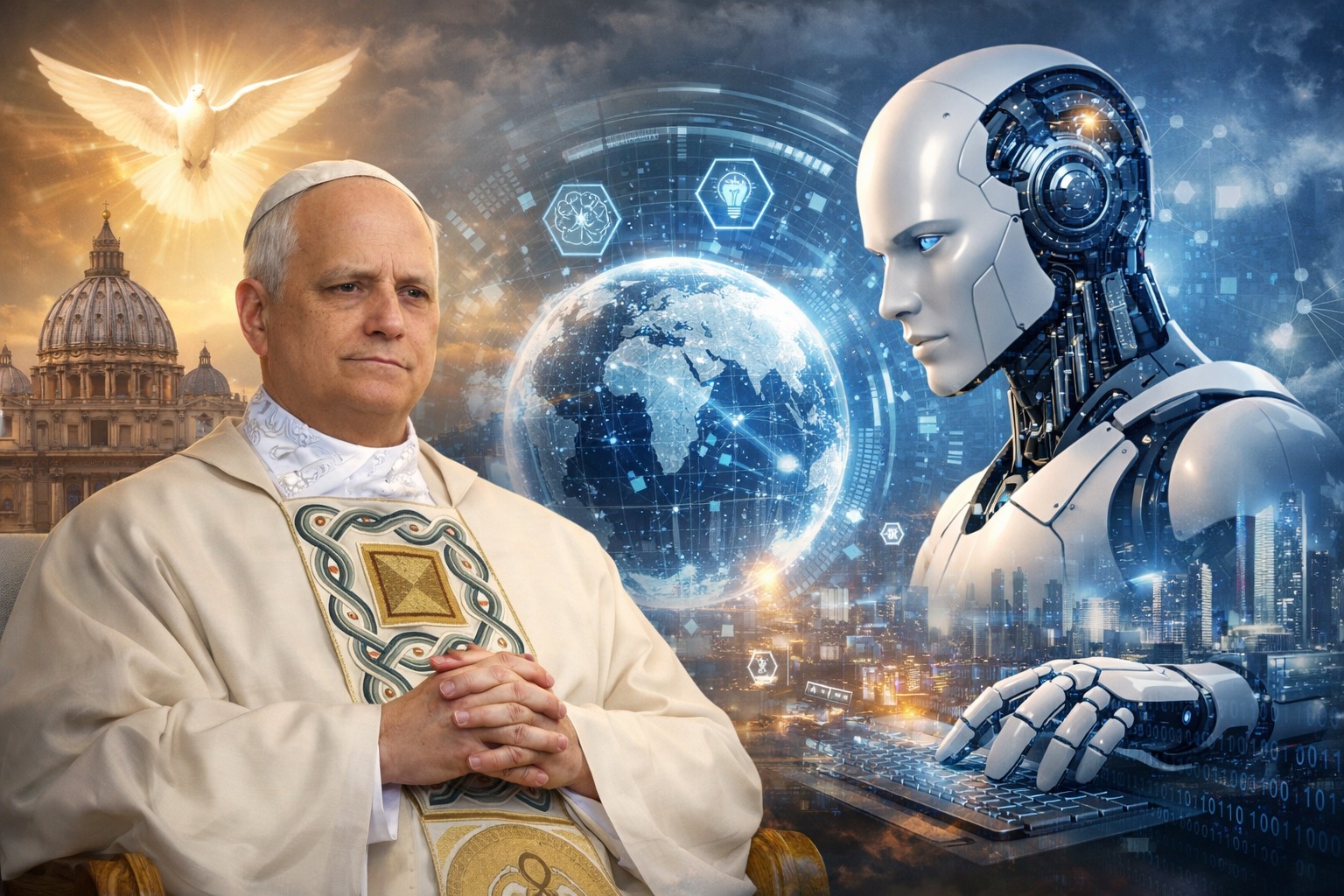

Pope Leo XIV wants priests to trust the Holy Spirit, not Artificial Intelligence.
I f you were looking to give up something for Lent this year (it isn’t too late), Pope Leo might have a suggestion. He didn’t mention it as a Lenten sacrifice, but it’s worth contemplating nonetheless.
In a private exchange at the Vatican’s Paul VI Hall, Pope Leo XIV exhorted priests of the Diocese of Rome to “rekindle the fire” of their ministry. According to one priest, he told them to rely on their brains rather than AI. “The pope … invited us to use our brains more and not artificial intelligence [AI] to prepare homilies, as he now sees and hears happening,” said the priest. The pontiff suggested prayer and to “truly learn again to listen to the Lord.”
Priests should seek the counsel of the Holy Spirit rather than ChatGPT.
Frankly, that’s good advice to everyone, including folks I encounter in my daily work, from writers to students. To be sure, AI can be helpful, especially in compiling and checking facts and even editing. The technology certainly can be a force for good, particularly in fields like the medical profession. But if you’re a writer whose writing is being generated by AI, well, you’re not really writing. I can’t imagine a genuine writer casting his or her beloved craft to the wind in favor of a blasted robot.
A true writer loves to write. A writer writes. A writer shouldn’t create “prose” from AI any more than a poet should, or a painter creating images from a computer.
As for priests, let’s concede a sad fact. Too many are terrible homilists. We Catholics have witnessed countless uninspiring and uninteresting homilies. A big appeal of nondenominational evangelicalism is that so many of those pastors are terrific preachers. That isn’t always the case with Catholic priests. So, one can imagine the temptation for those men of the cloth to seek the aid of AI. Nonetheless, the priest needs to be relying on his own brain, or the guiding of the Holy Spirit, more than Grok.
As for Leo XIV, the new pope has been warning about the pitfalls of AI from the start of his pontificate last May, since literally his first day on the job. The technology even relates to his papal name choice.
“I chose to take the name Leo XIV,” he explained to the College of Cardinals the day after his election. “There are different reasons for this, but mainly because Pope Leo XIII in his historic encyclical Rerum Novarum addressed the social question in the context of the first great industrial revolution. In our own day, the Church offers to everyone the treasury of her social teaching in response to another industrial revolution and to developments in the field of artificial intelligence that pose new challenges for the defense of human dignity, justice, and labor.”
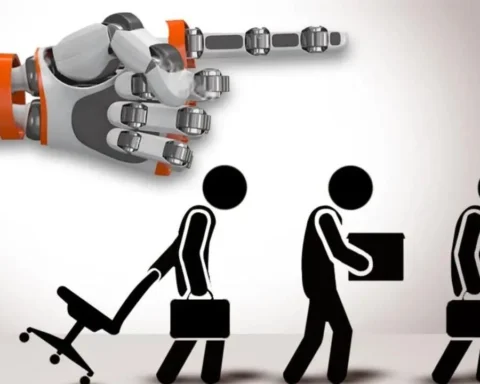
The new pope offered a compelling comparison. Just as Leo XIII had dealt with the momentous social changes of the “New Things” of the Industrial Revolution and then-modern world of the late 19th century (Rerum Novarum is Latin for “Of New Things”), Leo XIV is dealing with major upheaval in today’s postmodern world, including the tech-information revolution and new threats posed by artificial intelligence. Both revolutions, in the day of Leo XIII and Leo XIV, displaced workers and had a direct, dramatic impact on human dignity. Leo XIV is fully cognizant of this major change afoot.
For the record, the new pope is certainly not afraid of science. He’s actually a man of science. He’s a man of math. As an undergraduate at Villanova in the late 1970s, Robert Francis Prevost majored in math. Before the current pope was a trained theologian, he was a mathematician. (Click to order Paul Kengor’s new biography, American Pontiff: Pope Leo XIV and His Plan to Heal the Church.)
The fact that Pope Leo XIV is a mathematician says something about his mind — his very orderly mind. This is something that math aficionados quickly remarked upon when learning that the new pope is a mathematician. Catholic reporter Matthew McDonald was immediately struck by it after Leo’s election and interviewed several mathematicians who took to numbers to interpret the new pontiff.
McDonald quoted Martin Nowak, a professor of mathematics and biology at Harvard and a Catholic. “I’m not surprised that the pope has studied mathematics, because I’m convinced that God is a mathematician,” said Nowak. “It makes a lot of sense that his pastor on Earth is a student of mathematics.”
McDonald also quoted mathematician and Catholic Brad Jolly, who stated: “Often, the kind of person who wants to become a priest is the kind of person who sees order and beauty and truth and the transcendentals of nature in the world, and the people who see these things are naturally attracted to mathematics.” Jolly added: “Having a Pope with a mathematical background at a time like today is just such a blessing.”
Mathematicians operate within a system of absolutes. They’re not relativists. Popes and priests operate under the assumptions of absolutes — moral absolutes based on Biblical and natural law. They fight against what Pope Benedict XVI called the “dictatorship of relativism” that plagues the world today, including too many liberal churches.
McDonald also quoted James Franklin, retired professor at the School of Mathematics and Statistics at the University of New South Wales in Australia. “The basic idea is that study of mathematics attunes you to a certain kind of eternal realities,” notes Franklin. “With mathematical proof, you understand not only that Pythagoras’ theorem (say) is true but why it must be true…. Especially in these postmodernist days, an education restricted to the humanities, law, politics etc. can leave you with the historicist view that all ‘truths’ are up for grabs and can change with time. Someone with a mathematics degree won’t be tempted to believe that.”
A mathematician knows that two plus two equals four, not five.
And indeed, the Vatican Conclave that chose Robert Francis Prevost to be the new pope last May was hoping for a confident chief shepherd firmly grounded in reality and laws and truths and not relativism.
That brings us back to Pope Leo XIV and AI.
To repeat, this pope is certainly not against AI. He has already made several speeches and is planning forums on the subject. Much more will come. In a sense, he’s the right pope for the right time, as AI takes off.
But as it does take off, it brings pitfalls as well as benefits. One pitfall is that AI is prompting too many people — from priests to poets — to turn off their brains and turn instead to their computer. That’s not what should be happening. It isn’t how the Creator created us. Of course, God gave us the brains to create things ourselves, such as AI. There’s no reason not to use it. But as with so many technological innovations, including the splitting of the atom, it’s how you use the technology, for good or bad.
Overall, Leo XIV is right: we should do our best to rely first and foremost on our brains rather than AI.
Source: https://spectator.org/pope-leo-rely-on-your-brain-rather-than-ai/