 Mustafa Fetouri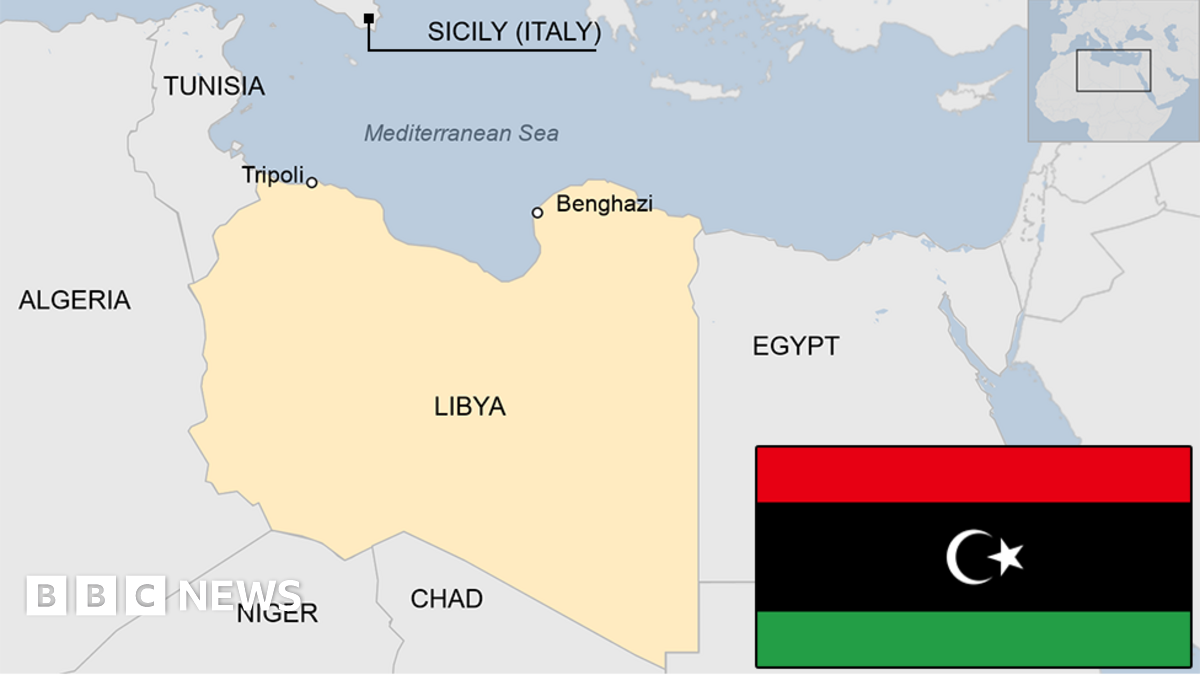

For nearly fifteen years, Libya has served as the world’s most expensive and repetitive political laboratory. Since the 2011 NATO intervention and the subsequent fall of Muammar Gaddafi, the United Nations Support Mission in Libya (UNSMIL) has operated through a revolving door of mandates and leadership. With the January 2025 appointment of Hanna Tetteh—the eleventh envoy to take up the mantle—each new leadership arrives promising a definitive roadmap to stability, only to find themselves lost in the same familiar cul-de-sac. What was designed as a transitional bridge to a sovereign, democratic state has instead institutionalised a state of ‘frozen chaos,’ where the process itself has become a substitute for progress.
In this laboratory, the “solutions” concocted in Geneva, Skhirat, Morocco or Tunis often ignore the volatile chemistry of the ground. The result is a country suspended in a permanent interim—a precarious equilibrium where rival administrations, fragmented security apparatuses, and foreign interests have found a comfortable, if cynical, status quo. As UNSMIL grapples with the latest anxieties surrounding constitutional divisions, the question is no longer when the transition will end, but whether the international community has inadvertently designed a system that thrives on never reaching a destination.
In this geopolitical laboratory, the most recent—and perhaps most damaging—experiment is the UN-facilitated ‘Structured Dialogue.’ Launched in late 2025 and continuing so far, the initiative was ostensibly designed to foster a broad-based ‘national vision’ that would pave the road to national elections: both legislative and presidential. Instead, it has served as a catalyst for deeper institutional fragmentation. By bypassing established legal frameworks in favour of an amorphous ‘consultative’ approach, the dialogue inadvertently opened a Pandora’s box regarding the country’s legal foundations. Libya’s ever-ready political spoilers, entrenched within the two rival administrations, have seized this opening to initiate a new phase of conflict—this time targeting the judiciary. What was once the last remaining ‘legal glue’ holding the country together, even if only on paper, is now being dissolved by competing claims of constitutional legitimacy that threaten to turn a political stalemate into a permanent judicial divorce.
While the UNSMIL-sponsored dialogue continues, its inherent weakness lies in its design: it produces recommendations, whenever it does, that lack both legal obligatory force and a framework for enforcement. Consequently, we have watched this ‘structured’ process descend, unintentionally, into a structural collapse of the judiciary itself. Rather than unifying the state, the dialogue’s governance track provided the friction necessary for the House of Representatives to formally activate a rival Supreme Constitutional Court in Benghazi this January. This move—which flatly rejects the authority of the long-standing Supreme Court in Tripoli—has effectively institutionalised a ‘judicial divorce.’ The result is a Libya that no longer possesses a single, undisputed venue to settle legal disputes. This is not merely a technical glitch; it is a fatal blow to any roadmap for national elections, as it leaves the country without a neutral arbiter to certify results or mediate the inevitable constitutional challenges. All this while the constitution is yet to be adapted.
This potential collapse of the legal system is the inevitable byproduct of treating an entire nation as a laboratory for external experimentation. Since the 2011 crisis, Libya has been the site of a recurring cycle of ‘roadmaps’ and ‘dialogues’—theoretical models of conflict resolution that are applied, fail, and are then simply rebranded under a new mandate. To date, the only significant achievement has been the 2020 ceasefire, which miraculously continues to hold, yet it remains a peace without a purpose. Within this laboratory, the UN serves as the chief technician, presiding over a series of controlled experiments that prioritise the preservation of the ‘process’ over the sovereignty of the state. By institutionalising these temporary, non-binding dialogues, the international community has inadvertently created a ‘frozen’ environment where political actors are incentivised to remain in a state of permanent transition. In this artificial ecosystem, progress is measured by the number of meetings held rather than the stability achieved, allowing a culture of ‘mandate-dependency’ to take root while the actual foundations of the Libyan state continue to erode under the weight of foreign-led trial and error.
The danger of this laboratory is not merely that the experiments fail, but that they provide a convenient smokescreen for a deeper, more cynical brand of ‘stability.’ While the world’s attention is directed toward the Structured Dialogue’s endless committees on ‘governance’ and ‘human rights,’ the real business of the state—the exploitation of its vast energy wealth—continues in a parallel reality. The recent signing of a historic $20 billion, 25-year oil partnership between the National Oil Corporation (NOC), TotalEnergies, and ConocoPhillips is a case in point. It reveals the ultimate paradox of the frozen chaos: international powers are willing to sign quarter-century contracts with a Tripoli-based administration whose legal legitimacy is widely disputed and being actively dismantled by a rival Supreme Court in Benghazi. In this laboratory, ‘stability’ has been redefined. It no longer requires a unified state, a functioning judiciary, or a constitutional mandate; it only requires a secure perimeter around the oil fields. By treating Libya as a fractured set of resources rather than a sovereign nation, the international community signal that the ‘political process’ is little more than a necessary performance to maintain a managed void.
The ultimate irony of the Libyan laboratory is the emergence of what can only be described as ‘zombie diplomacy.’ While the eleventh envoy, Hanna Tetteh, moves between Tripoli, Benghazi and foreign capitals to promote the Structured Dialogue the international community’s actual behaviour suggests a departure from multilateralism in favour of raw pragmatic realism. We see this in the recent high-level shuttle diplomacy of figures like the US envoy Massad Boulos, who just days ago held parallel meetings with both the UN recognized government in Tripoli and the LNA leadership in Benghazi. This ‘dual-track’ engagement sends a clear message to the Libyan political class: while the UN mandate provides the formal stage for the performance of peace building, the real keys to legitimacy are territory, weapons, and revenue. By treating military heirs and unelected incumbents as primary interlocutors, the international community has effectively validated the obstruction of the very roadmap it claims to support. This is the terminal phase of the experiment—where the ‘laboratory’ no longer seeks to produce a functioning state, but merely to manage a collection of fiefdoms that are stable enough to keep the oil flowing, yet too fractured to ever assert true national sovereignty.
Ultimately, as long as Libya remains a laboratory for international trial and error rather than a sovereign state with a unified legal soul, the UN’s ‘Structured Dialogue’ will continue to be a dialogue of the deaf—producing only more of the very ‘frozen chaos’ it was ostensibly designed to thaw.”
Source: https://www.middleeastmonitor.com/20260129-libya-and-the-un-mandates-a-laboratory-of-frozen-chaos/