

 Kemal Öztürk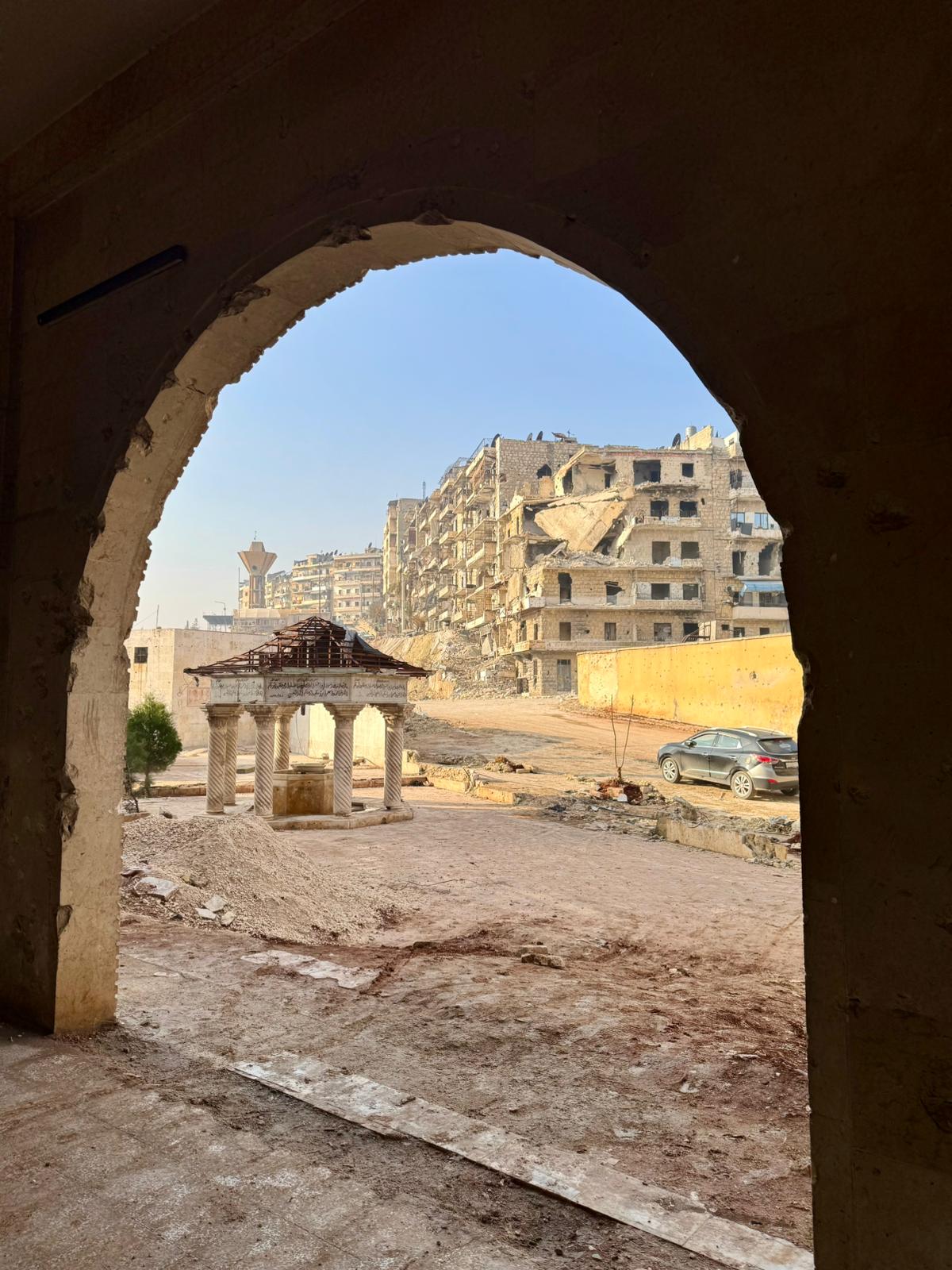

I am writing this article from Syria. There is a huge gap between what I have seen and what is being said in public, and most of it does not reflect the truth…
When I entered the Sheikh Maqsoud neighborhood in Aleppo, where the first clashes between the YPG and the Syrian Army began on January 6, 2026, I felt great shock and sadness. Because the streets, roads, and houses I saw looked almost like a refugee camp. This neighborhood, which had remained under the control of the YPG—an organization that presented itself as the representative of the Kurds—for nearly 15 years, resembled the Sabra and Shatila refugee camps I had seen in Lebanon. The roads were full of potholes, everything was mud. Electrical cables were left exposed, spreading everywhere like a spider web; the houses were rundown, and the poverty of the people could be understood from their faces at first glance. There had been no clashes or war in the streets I walked through, and this misery was not new. Instead of rebuilding these places, the YPG had spent the money elsewhere—on tunnels underground.
Tunnels Passing Through the Mosque
The Sheikh Hasan Mosque is situated on the edge of the Sheikh Maqsoud neighborhood and occupies a position overlooking Aleppo from above. The mosque had been seized by YPG militants, and inside it, they had prepared fortifications with sandbags. Its walls had been broken to create firing zones for snipers. A large pit had been dug right in the center of the mosque, turning it into an access point to the tunnels excavated beneath it. Many tunnels had been dug extending inward into the neighborhood. The mosque had been built on very hard rock, so it was evident that the tunnels had been excavated with difficulty. These dark tunnels, with muddy ground, extended for hundreds of meters in many directions. As I struggled to walk through them, a security officer told me that there were many traps and mines inside.
YPG militants would come to the mosque through these tunnels, open fire and engage in clashes from there, and then escape back through the same tunnel to hide inside the neighborhood. The intense fighting was evident from the ruined state of the mosque. There were large artillery shell holes in its dome and walls. On the qibla side, beneath the word “Allah,” there were sandbags, and the wall had been riddled with bullet holes.
Snipers and heavy machine guns had been placed in the buildings across from the mosque, and fire had been opened from there. As a result, the apartment buildings in the area had also been turned into ruins during the clashes.
YPG militants who found themselves in difficulty during the clashes in and around the mosque fled deeper into the neighborhood and this time turned a hospital into a stronghold. When I entered the hospital, I could tell from the bullet and rocket marks on the walls that heavy fighting had taken place there as well. Stethoscopes, medications, and hospital equipment were scattered across the floor. Posters of Abdullah Öcalan hanging on the walls had been torn and thrown to the ground, and the beds and stretchers in the patient rooms had been tossed about.
This place, too—like the mosque—had become a battlefield and a combat zone between Syrian forces and YPG militants.
The Misery in Sheikh Maqsoud
It should not be assumed that the entire Sheikh Maqsoud neighborhood was like this, because not every part had seen fighting. When I walked through those areas, this time I saw deep traces of misery, deprivation, and backwardness in the streets. To be honest, I was very saddened—this way of life imposed on the Kurds was a shameful situation. Before the civil war, workers from Aleppo’s industrial zone used to live in these neighborhoods. In other words, they were actually poor neighborhoods. However, after the YPG took control of the area, the demographics changed completely. The Kurdish population, which was 45%, rose to 80%, and Arabs and Christians migrated from here. Under the civil war and YPG administration, the poverty and misery of the two neighborhoods increased even further. Instead of using the money to repair the roads, the electrical system, and the infrastructure in the neighborhood, the YPG spent it on digging tunnels underground.
The YPG Caused the People Suffering
Those living in the Kurdish neighborhoods carried on their lives under the harsh oppression of the organization. For this reason, they did not want to speak in front of cameras. A few who were brave enough said that the YPG had made no investments in the neighborhood, that it discriminated between Arabs and Kurds, and that it arbitrarily detained people. Especially the religious ones complained about the YPG’s hostile behavior toward mosques and religious life.
In fact, even if I hadn’t listened to these complaints, the misery and deprivation I saw in the neighborhood made it clear how poorly the YPG governed, how much it caused the people to suffer, and how exhausted people had become. From interviews with residents in other cities administered by the YPG, it was clear that the situation was the same there as well.
All of this shows how the YPG squandered the great opportunity it had in the vast geography where it controls one-third of Syria. Instead of winning over the people, working with them to develop the cities, and demonstrating exemplary governance, it spent years digging tunnels underground.
Misconceptions About the SDF–YPG in the World
I’m heading from Aleppo to Raqqa and continuing my writing in the car. My driver doesn’t seem surprised by the cars driving in the wrong direction. As for me, I’m looking out at the misery along the road from Aleppo to Raqqa—the ruined buildings, the desolate villages. A country can hardly be more devastated than this. Sixty years of dictatorship and fourteen years of civil war have ravaged this beautiful land, and still, it hasn’t found peace.
Now, the country continues to suffer because of the YPG’s, the Druze’s, and the Alawites’ demands for autonomy and independence, as well as Israel’s occupation and acts of terror. This painful picture affects me deeply, on a human level…
Raqqa and Deir ez-Zor were Arab cities, and in fact, Arab tribes held control there. Due to U.S. pressure and financial reasons, these tribes entered into cooperation with the YPG under the SDF umbrella in 2015. Hasakah, Ayn al-Arab, Qamishli, and Deir Hafir also joined these two cities. The U.S. funded all of the SDF’s expenses and even handed over the oil revenues from these regions to the SDF.
Because Mazlum Abdi was appointed commander of the SDF, the impression spread that the entire armed force of about 45,000 was under YPG control. In fact, Mazlum Abdi even claimed that the number had reached 100,000—but this was not true. Another lesser-known fact is that the YPG never had full control over the tribes.
Despite all this, the global perception was that the Kurds (the YPG falsely presented itself as the representative of all Kurds—this was also untrue) were a major force in Syria. But this had absolutely nothing to do with the reality on the ground.
On top of all these false perceptions, the YPG sealed its own downfall by governing the cities under its control—just like it did in the two neighborhoods of Aleppo—with corruption, racism, discrimination, and mismanagement.
How Did the Cities Change Hands So Easily?
In all the areas it controlled, the YPG pursued a discriminatory and racist policy against groups that were not Kurdish or did not adopt its ideology—including some Kurdish tribes. It used the money obtained from U.S. aid, oil revenues, electricity income, taxes, and trade for its own organizational interests, and committed major acts of corruption. I’m talking about billions of dollars.
When I met in Aleppo with Dr. Usama Muslim, the nephew of Salih Muslim—one of the founders of the SDF—he said the following: “YPG commanders got rich through corruption and smuggled all their wealth abroad. Neither the Kurds nor the Arabs received a share of the income. Our people became even poorer, and misery prevailed in all the areas governed by the YPG.”
This injustice finally pushed some Arab tribes to the edge, and in 2023 they revolted against the YPG in Deir ez-Zor. Fierce clashes erupted and spread as far as the northern countryside of Aleppo. The U.S. did not intervene—on the contrary, it secretly supported the YPG. Iran and the Assad regime merely watched as the organization used American weapons to crush the Arab tribes. In the end, the Arab tribes suffered heavy losses and had to retreat. However, this marked the beginning of the SDF’s fragmentation.
The YPG never took into account the requests and demands of the Arab tribes. It believed that with U.S. support, it could continue to hold on to the major cities and territories. That was a fatal miscalculation—and at the beginning of this year, it was forced to confront that bitter truth.
Ahmet Shara, on the other hand, pursued a smart political strategy, establishing warm relations with the Arab tribes and successfully winning them over. As a result of this rapprochement, the Arab tribes supported the March 10 agreement.
However, the PKK commanders in the Qandil Mountains were not pleased with the agreement, and Mazlum Abdi could never defy their authority. At the PKK’s behest, the YPG engaged in clashes with the Syrian army in two neighborhoods of Aleppo, and this mistaken decision became the beginning of a major defeat. One by one, Arab tribes announced that they were leaving the SDF and joined the ranks of the Damascus government. Thus, Raqqa, Deir ez-Zor, and Deir Hafir—cities that had in fact already been under the control of Arab tribes—quickly changed hands within just a few days. This created a shock around the world, but within the Syrian context, it was not a surprising development. Everyone already knew that those cities were governed by Arab tribes.
The YPG labeled the people’s shift in allegiance—people whom it had oppressed—as “betrayal,” but the truth is that the people—including patriotic Kurds—changed sides simply to free themselves from that oppression.
Why Did the U.S. Dismantle the YPG?
Shortly after Mazlum Abdi embellished his meetings with U.S. presidents and served them to the press, he was faced with a major emotional collapse and bitter disappointment.
U.S. Special Representative for Syria Tom Barrack announced in a tweet that their cooperation with the SDF was over and that they would now work with the Syrian government. This may have been one of the most iconic breaking points for the armed Kurdish movement. The YPG suddenly found itself alone—and this time accused the U.S., which now stood behind the Damascus government, of “betrayal.”
The Kurds in the diaspora, who had been misled by the YPG’s distortion of the facts on the ground, seem to have experienced an even deeper emotional break than Mazlum Abdi. In their anger, they declared everyone guilty. Turkey was at the top of the list. The pro-Kurdish DEM Party organized demonstrations in cities in an effort to pull the YPG out of its pit of disappointment, but this, too, was a futile effort.
The U.S. had now seen the realities on the ground. Supporting the SDF no longer made sense in the face of Ahmed Shara’s strong leadership, which was backed by Turkey, Saudi Arabia, Qatar, and many other countries. The YPG and PKK’s blind trust in the U.S. and their failure to learn from history were, in fact, the primary causes of their greatest disappointment.
It Is the YPG—Not the Kurds—Who Should Be Disillusioned
Not all Kurds in Syria support the YPG. Ideologically, they are very different. They are deeply religious, in stark contrast to the socialist YPG, which turns mosques into trenches. However, due to their lack of power, they were unable to change the status quo and remained silent.
None of these policies, conflicts, or alliances have anything to do with the Syrian Kurds. Therefore, after the U.S. and Arab tribes abandoned the SDF, the non-separatist Kurds here did not experience any disillusionment. The truth is, it is the YPG and PKK that should be disillusioned. They failed to read the situation, failed to negotiate, failed to honor the agreements they signed, failed to urbanize, and failed to win the hearts of the people. No state, no tribe, and no rational actor would want to work with such an organization.