 Alain Alameddine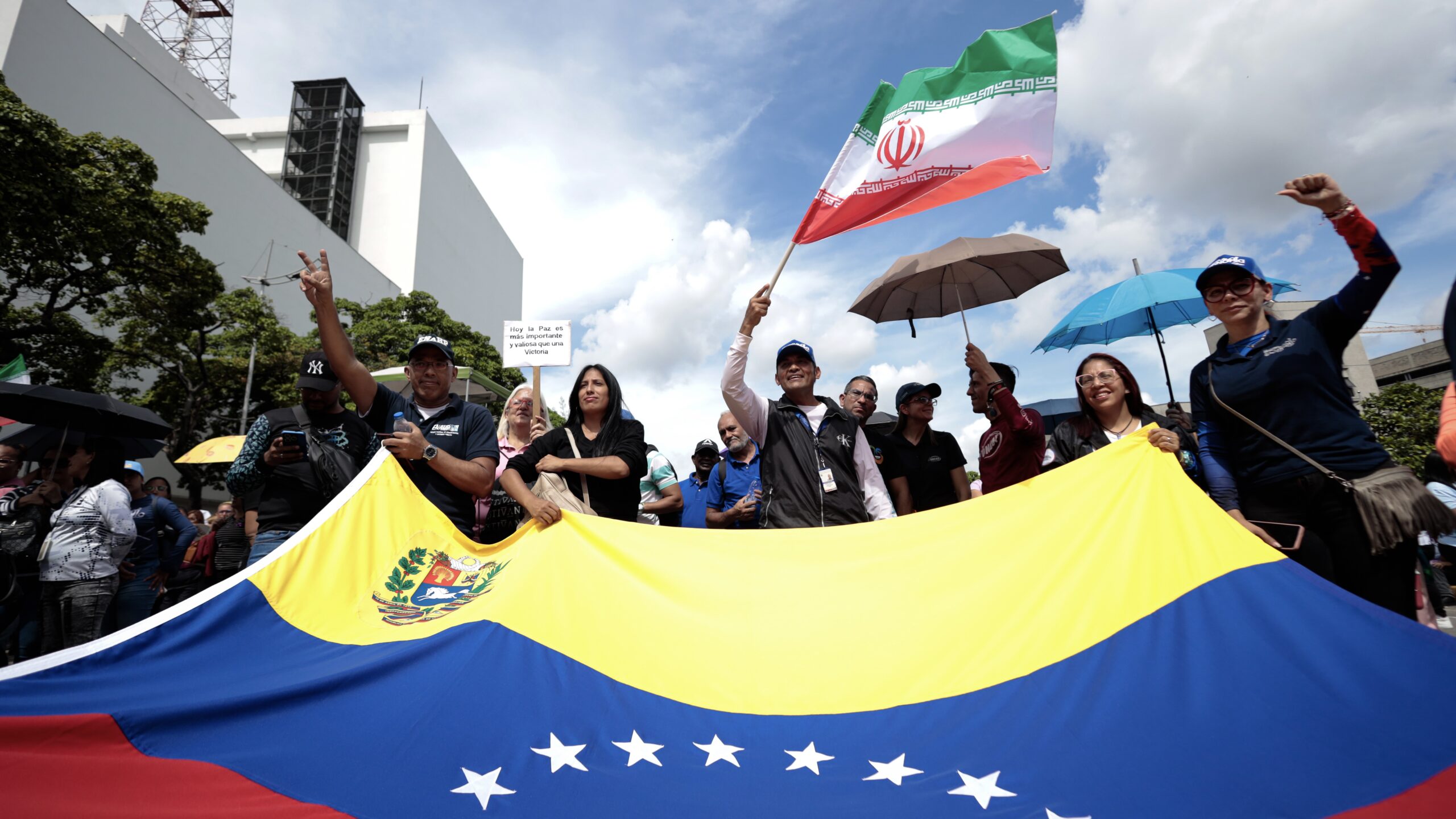

The recent weeks, just like the recent years, have been momentous, as the US administration abducted Venezuelan president Maduro, declared its intention to annex Greenland, and threatened to attack Iran then appeared to back off. What are some key takeaways that can help us grasp what is happening, and affect what the US administration is planning?
First, it’s not just about Trump. Although much of the attention has been centered on him and his unusual personality, one person seldom affects the political scene. Just like in any other state or administration, political scene is shaped by the balance of power imposed by capital and organized groups such as the media, lobbies or syndicates. Trump can manoeuvre, and choose certain groups’ interests over others, but only within these overall constraints. Focusing on his person can shift away the attention from the capitalist and colonial system that enabled his ascent to power and the major actors that are interested in —or even behind— the kind of decisions the US administration is taking.
Which brings us to the second point, that it’s also not just about resources—actually, primarily not so. Of course, the US administration is interested in putting its hand on other societies’ oil and precious metals. But there’s a reason why it is now targeting Venezuela and Greenland, two countries on the American continent, and it mentions it explicitly in its Nov 2025 National Security Strategy. The strategy takes note of China’s growing economic hegemony and presents it as a threat to the US. It focuses on “reindustralizing the US” —hence the tariffs— and containing China.
This marks a turning point from its over thirty-years-old open-market policy, and, crucially, from soft power to hard power. Within this context, the document presents the Western Hemisphere as its primary theatre and states that “the United States will reassert and enforce the Monroe Doctrine to restore American preeminence in the Western Hemisphere”. It leaves no doubt as to the fact that this means a “readjustment of our global military presence to address urgent threats in our Hemisphere”. This is the context in which the US is seeking to entrench its hegemony, first and foremost over the American continent.
The US’s threat and use of violence are thus disrupting the world order. This does not refer at all to the European imaginary that we live in an order of law and values—Societies in the Global South know very well we already live in a deeply violent world. The international institutions that the US administration is ignoring are actually colonial institutions: For example, the US, Russia and China are not parties to the ICC, meaning that any country joining the ICC would be liable to it but would not be protected by it from war crimes by any of these three world powers. The colonial powers that set up the ICJ decided that it cannot enforce its decisions and that only the UN can—yet UN decisions are subject to approval by the five global powers.
The world order we live in operates by this basic imperialist law: Global powers can do whatever they want, as long as the other global powers are OK with it. It was set up, not to protect weak societies from global powers, but to protect global powers from each other—to institute the negotiations between them, making sure the horrors they committed to each other in the so-called world wars only happen to others. Accordingly, when Europe complains about Trump reshaping the world order, they are not referring to a global order of peace and justice, but to an order that allowed them to share hegemony with the US. This is the order they are attempting to save by sending troops to Greenland. And this is the order that the US administration is disrupting, and might even destroy. This antagonism with Europe is one we should study and make the best of in our struggle for a world order that is actually just.
This puts on political movements and citizens in the Global South the responsibility of correctly understanding the political scene. Recent events in particular have shown the limitations of oversimplistic analyses. For example, Maduro was not abducted because of his support for Palestine. In a recent article, Palestinian writer Hussam Abu Hamed speaks of this explanation as “a lazy one that ignores the fact that what happened is related to a declared set of goals of influence, power, and the rearrangement of the Latin American region, and is not related to a single issue. Turning Palestine into the ultimate cause obscures what is more important: that Washington is saying that it wants Venezuela as a manageable country. And here lies the danger for Palestine itself, when Palestine becomes the magic explanation for every coup or invasion, transforming it from a rights issue to a brand in the market of conflicts.”
Similar oversimplistic analyses have appeared in the context of the scene in Iran. Most were black or white, either unequivocally supporting the demonstrations as just ones in the face of an oppressive regimes or standing against them as foreign-backed against a regime targeted by Israel and the US. The reality is, however, more complicated than that. On one hand, the colony openly stated its interference in the protests, so how could we claim otherwise? On the other hand, staunch anti-Zionist movements such as Tudeh—whose fighters resisted the colony and were martyred alongside Palestinian fighters—declared their support of and participation in the demonstrations, so how could we be so quick to demonize them? The reality is that the people on the ground in Iran are diverse. Some support the return of the Shah-to-be and normalization with the colony. Some are socialists who revolted with the Islamists against the Shah and were then killed by the Islamists. Some are Mossad agents. Some are petty bourgeoisie who lost their capital and want it back under any regime. Some are women who are oppressed by religious rule and want secularism. Some are Kurds or Arabs who see an opportunity for self-rule and/or independence. Reality is colourful, and black-or-white dichotomies, though pleasant to our minds, fail to grasp what is happening. We cannot affect the political scene if we cannot understand it properly.
Which brings us to the concluding point: We must seek, not only to understand events, but to shape them. Most analyses of Venezuela, Greenland and Iran are stuck in observation mode, and therefore fail to escape theoretical “with/against” dichotomies. We must build the individual and organizational capacity to read the political scene accurately, analyse shifts in the balance of power, and then build the power to affect these shifts in favour of a liberatory and democratic political vision.
Source: https://www.middleeastmonitor.com/20260122-venezuela-greenland-and-iran-key-takeaways/