 Doç. Dr. Necmettin Acar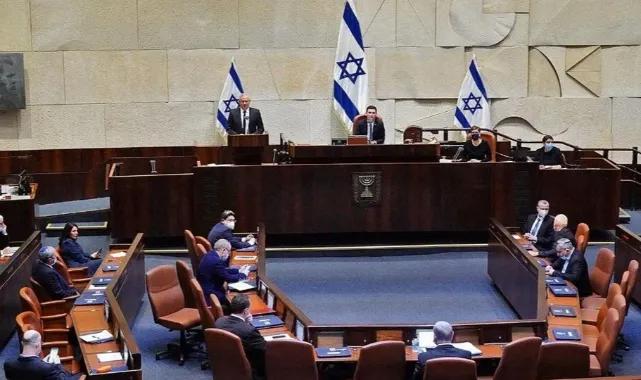

Beyond the Narrative of the “Most Democratic State”
Mainstream international relations literature has made it a habit to position Israel as the “most democratic state” in the Middle East. This exceptional role attributed to Israel not only distinguishes it positively from the rest of the region but also implicitly belittles the governments of Middle Eastern countries by undermining their state traditions and institutional capacity. In this context, the holding of regular elections, the relatively smooth transfer of power, the existence of an institutionalized legal system, and a vibrant civil society-state relationship have frequently been cited as indicators to present Israeli democracy as a “model example.” The biased yet distinct differences drawn between Israel and its neighboring Arab/Middle Eastern states in categories such as press freedom, democracy indices, and the rule of law have long sustained this narrative, transforming Israel into a normative “exception” that is almost to be emulated in the regional context.
The aim of this article is to question this mainstream Western approach to Israel’s political system, particularly in light of the political and military practices that have become more visible since October 7. The central claim of the article is that Israel, like many political structures in the Arab Middle East, should be analyzed not through the concept of the “state” but rather through that of the “regime.” When the functioning of democratic institutions, the actual limits of press freedom, the level of commitment to international law, and the nature of state-society relations are assessed together, it will be argued that Israel’s governance structure operates not as a normative-democratic exception, but rather according to a security-centered, privilege-producing logic that prioritizes regime security. In this framework, Israel should not be read as a “democratic showcase” placed above other political structures in the Middle East, but as an example where the same regime dynamics are reproduced under different institutional guises.
Middle Eastern Regimes
One of the core pursuits of the discipline of international relations is to categorize states and their political systems into conceptual classifications for comparative analysis. Mainstream theories typically address the political structures in the Arab Middle East under the heading of “regimes.” This classification involves a typology ranging from one-man rule to absolute monarchies and varying degrees of personalized autocracies. The common denominator in this approach is the weakness of the representative legitimacy bond between the rulers and the ruled. As a result, the gap between the public interest and the personal or dynastic interests of the ruler becomes central to the explanation of state authority.
In this context, the concept of “regime security” provides a sharp analytical lens. This concept highlights that the referent object of national security is not society, but the ruling elite. Consequently, the military, intelligence, and security bureaucracy become institutionalized in ways that protect the survival of the regime. Social opposition, foreign policy priorities, and even development strategies are all designed to extend the regime’s lifespan. In practice, the claim of “national interest” is reduced to a symbolic veil that legitimizes the regime.
The rent distribution mechanisms of Arab oil economies have reinforced this dynamic. Revenue derived not from taxation but from hydrocarbon exports has relieved regimes of the obligation to be accountable to society, while simultaneously increasing their capacity to purchase loyalty. In such systems, elite networks replace institutional oversight with political allegiance, and channels of participation operate through arbitrary patronage rather than procedural mechanisms. Protest potential is suppressed by a security apparatus organized not around legality, but around personal loyalty. As seen in 2011, when a regime crisis is triggered, state capacity itself faces the risk of simultaneous collapse.
Theoretically, this picture necessitates moving beyond classical state-centric analyses. The regime security perspective views even foreign policy as a tool for managing internal legitimacy crises. At times, adopting a hardline stance in regional rivalries may function to consolidate consent at home. Therefore, in analyzing the Arab Middle East, taking “regime type” rather than “state” as the independent variable allows for a more consistent explanation of both internal transformation and regional behavior.
The Netanyahu Regime
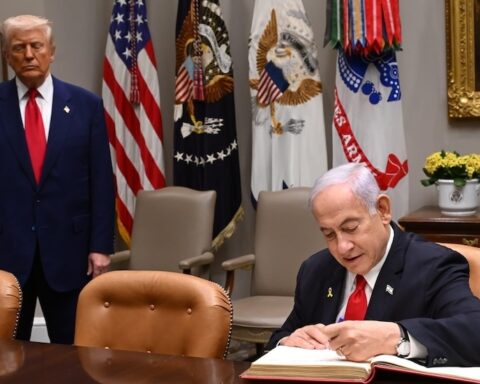
Conceptualizing the current Israeli administration as the “Netanyahu regime” enables us to emphasize a similar logic of “regime security” without qualitatively distinguishing it from Arab autocracies. Although formally an electoral democracy, the ruling coalition’s primary objective is not “national security” in Buzan’s sense, but rather the continuity of the power bloc. Judicial reform initiatives, intra-coalition bargaining that exerts pressure on the media and civil society, and the systematic weakening of independent institutions can all be understood from this perspective. Political pressure on press freedom is legitimized through the discourse of security and the invocation of a “state of war,” thereby pushing critical media into the category of an “internal threat” to regime security.
A similar double standard is observed in the realm of international law. Allegations of war crimes and genocide regarding military operations in Gaza are mostly presented to the domestic public as “attacks on Israel’s right to exist,” effectively criminalizing such claims. This frames international law as part of an “external conspiracy” against the survival of the regime. Accountability mechanisms—both in domestic law and at the international level—are restricted by the security bureaucracy, coalition balances, and the ideological red lines of the far right. In this system, democratic conventions have been reduced to electoral procedures, while liberal components such as rights, freedoms, and the separation of powers have been progressively eroded.
One of the most important factors reinforcing this structure is the “external rent” generated by military and financial support, particularly from the United States. Security aid and political protection enable the regime to maintain a war economy and implement harsh domestic security policies without bearing the political cost. Consequently, a significant segment of the Israeli economy—through high-tech and defense industries—becomes dependent on external funding and war conditions, acquiring a de facto rentier character. Actors advocating for productive, peace-oriented economic integration are marginalized, while far-right elites who subordinate economic activity to the logic of the “security state” gain strength. As a result, the gap between the discourse of the “national interest” and “the interests of the Netanyahu regime” narrows. It is not the state, but rather the regime type that emerges as the principal variable explaining both the internal crisis and regional behavior.
In this context, Tom Barrack’s statement at the Doha Forum—“The thing that really works best in this region, whether you like it or not, has been a ‘benevolent monarchy.’ That’s the model that works”—serves as a striking mirror reflecting the questioning of Israel’s supposedly exceptional democratic status. His remark, “I don’t see democracy anywhere,” underlines the dominance of authoritarian, patrimonial, and security-centered regimes of varying intensity in the region, rather than institutionalized liberal democracies. Thus, although Israel presents itself in its official discourse—and is portrayed in Western literature—as “the only democracy in the Middle East,” its practical operation exhibits notable similarities with a typical Middle Eastern regime.
A mentality that prioritizes regime security over social security, practices that restrict press freedom in the name of security threats, an approach that reduces international law to a flexible instrument reinforcing regime interests, and dependence on “external rents,” especially from the U.S., all necessitate positioning Netanyahu’s Israel not within classical state-centered analyses, but within the literature on regime types. The existence of electoral procedures amounts to nothing more than a “democratic veneer” masking this regime logic; liberal-democratic elements such as accountability, transparency, and the rule of law are steadily eroding. Therefore, understanding Israel not as a normative exception, but within the same analytical category as the security-driven, rentier, and privilege-producing political orders of the Middle East—that is, as a “regime”—offers a more consistent framework for analyzing both its current practices and regional behavior patterns.