 Doç. Dr. Mehmet Rakipoğlu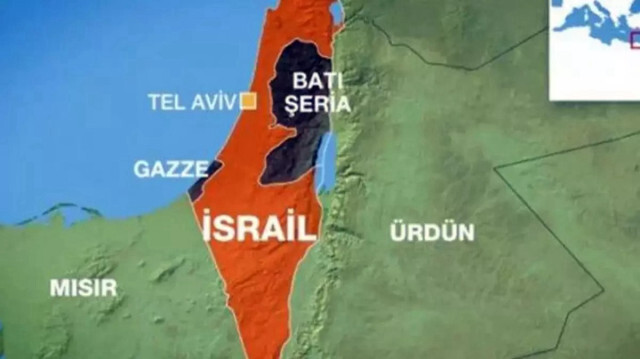

The colonial practices of the 19th and 20th centuries demonstrate that imperial powers systematically applied the principle of “divide and rule” to maintain control over the territories they occupied. The main objective of this strategy was to disrupt the homogeneous structure of the local population by creating artificial divisions, thereby fragmenting any potential resistance to occupation and establishing absolute dominance over resources. The arbitrary division of the Middle East through the Sykes-Picot Agreement after World War I constitutes one of the most striking examples of this. Similarly, Britain’s construction of “new villages” in Malaysia and the United States’ “strategic hamlets” policy in Vietnam aimed to strengthen control mechanisms by geographically isolating the local population. The “bantustans” implemented by the apartheid regime in South Africa, on the other hand, divided the Black population along ethnic lines, offering them false independence and establishing systematic domination through these structures. This historical context reveals that the division policy implemented by Israel in the Gaza Strip, referred to as the “Yellow Line,” parallels colonial control methodologies.
Israel’s Division Strategy and Gaza
An analysis of historical colonial practices shows that the division of land has been a fundamental tool used by occupying powers to make their rule permanent. The “Yellow Line” policy observed in the Gaza Strip can be considered a contemporary reflection of this pattern. This policy divides Gaza into two separate geographical parts, with approximately 47% of the population confined to areas under Hamas’ de facto control, and the remaining 53% in areas under the direct authority of Israeli occupation forces. The boundary that determines this division is an imaginary line referred to as the “Yellow Line.” This practice functions by declaring certain parts of Gaza as “buffer zones” or “safe zones” under Israeli control, while isolating the rest of the Palestinian population by trapping them in the other half. This situation is interpreted as a present-day manifestation of a colonial isolation strategy.
The administrative division in the West Bank is also a product of a similar logic. With the 1995 Oslo II Agreement, the region was divided into three areas—A, B, and C—based on administrative control, and full control over Area C, which makes up approximately 61% of the land, was granted to Israel. In these areas, Israel has established settlements, military training zones, or designated them as state land, significantly restricting Palestinian access and use. As a result, the jurisdiction of the Palestinian Authority has been limited to fragmented, disconnected areas; this arrangement resembles the bantustans in South Africa and echoes a system of “segmented land control.” The Yellow Line arrangement in Gaza can also be read as a continuation of this colonial logic and is viewed as part of a broader plan aimed at permanently transforming Gaza’s geographical and demographic structure.
Control of Land and Resources
At the core of Israel’s strategy in the Palestinian territories lies the establishment of absolute control over fertile agricultural land and water resources, thereby depriving Palestinians of food sovereignty. In the West Bank, the majority of the most fertile land is located in Area C, which is under full Israeli control. For instance, the Jordan Valley and surrounding areas with high agricultural potential have been designated as “military security zones” or “settlement areas,” thus barring Palestinian farmers from using them. Furthermore, Israel controls approximately 80% of the underground water resources in the West Bank and imposes a strict permit regime that severely restricts Palestinian access to water. Under these conditions, Israeli settler terrorists practice water-intensive agriculture using modern techniques connected to Israel’s national water network, while Palestinian farmers are confined to scarce water resources, and agriculture’s contribution to the Palestinian GDP remains as low as 2.6%. This situation renders food sovereignty practically impossible for Palestinians in the West Bank and makes the population dependent on external food aid.
In the Gaza Strip, this situation has reached even more dramatic proportions. Despite its unilateral withdrawal in 2005, Israel has maintained control over Gaza’s coastal strip and border areas. Artificial roads, concrete barriers, and military lines have been constructed, fragmenting agricultural land and rendering it unusable. The intense bombardment, blockade, and acts of genocide following October 7, 2023, have rendered approximately 75% of Gaza’s agricultural land unusable. Moreover, as part of agricultural warfare tactics, large areas of farmland have reportedly been “sterilized” through the use of chemical agents. All these factors have almost entirely eliminated Gaza’s capacity for self-sufficient food production. According to data from the World Food Programme, by 2025, 80% of Gaza’s population will face acute food insecurity. This condition places Gaza in a state of absolute humanitarian and economic dependency, constituting the ultimate outcome of Israel’s strategy of land and resource control.
Transfer of the West Bank Model to Gaza
Israel’s strategy for Gaza can be seen as the export of the “limited autonomy” model that has been applied in the West Bank for decades. This model consists of three fundamental dimensions: military, political, and economic.
Militarily, Israeli occupation forces have effectively divided Gaza into two parts by constructing concrete blocks, fortifications, and checkpoints along the “Yellow Line.” The systematic destruction of infrastructure in the north and the forced displacement of the population to the south reinforce this division. Additionally, a buffer zone at the Rafah border tightly controls Gaza’s connection with Egypt. Previously, Israel divided Gaza along an east-west axis with the “Netzarim Corridor,” and now continues to maintain control over internal transportation routes through similar military roads, thereby breaking Gaza’s geographical integrity. Although Israel presents these lines rhetorically as “buffer zones,” they have effectively become military borders.
Politically, instead of establishing an autonomous Palestinian administration in Gaza, a proposal has been made to form an international “Peace Council” and a technocratic transitional government. However, the fact that these structures are expected to operate in coordination with Israel and other foreign powers indicates that decision-making authority will largely remain in the hands of the occupying side. This situation implies the exclusion of the political will of the people of Gaza and demonstrates that the so-called autonomy has evolved into a de facto guardianship regime. Israel’s announcement that it will concentrate humanitarian aid and reconstruction activities only in areas under its control is an indicator of this controlled governance model.
Economically, reconstruction and humanitarian aid programs are concentrated in the “green zone” demarcated by the “Yellow Line.” Temporary settlement camps constructed in southern Gaza cause the needs of the population remaining in the north to be deprioritized. These actions divide Gaza society logistically and economically, creating sustainable exclusion under the guise of “alternative safe communities.” The ports, airports, and main infrastructure facilities that are fundamental to economic independence are either kept under Israeli control or destroyed, cutting off the lifeblood of Gaza’s economy and making external dependence permanent. The post-war devastation of the Gaza port is concrete evidence of this strategy.
In conclusion, Israel’s division strategy in the Gaza Strip bears significant similarities to historical colonial “divide and rule” methods. The “Yellow Line” policy employed by the occupying forces aims to establish lasting domination over the Palestinians by fragmenting geographical integrity, isolating the population, and asserting absolute control over vital resources. The transfer of the model of administrative fragmentation, controlled autonomy, and resource seizure—previously tested in the West Bank—to Gaza points to the systematic and planned nature of this strategy.
This process takes the form of what may be called neo-colonialism, distinct from the direct rule methods of traditional colonialism. While giving the impression of a local governance structure on the surface, in reality, all military, political, and economic decision-making mechanisms are concentrated in the hands of the occupying power (Israel). Ultimately, the goal is to permanently divide Gaza into manageable fragments and entirely eliminate the idea of a unified Palestinian sovereignty. Therefore, it becomes clear that in evaluating proposed peace efforts for Palestine, the international community must consider not only political agreements but also these structural and geographical mechanisms of domination. What is happening in Gaza constitutes clear evidence that even in the 21st century, colonial logic persists through different instruments, and that the struggle for control over land, resources, and population lies at the heart of contemporary conflicts.