 Mathew Burrows – Robert A. Manning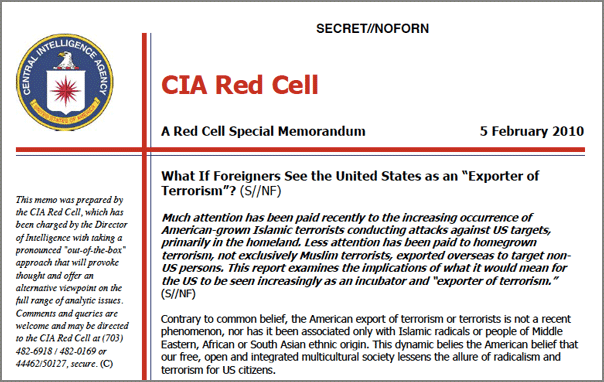

US policymakers are forgetting the lessons of history at just the moment their recollection is most needed.
The Stimson Center publishes the Red Cell series. Drawing upon the legacy of the CIA’s Red Cell—established following the September 11 attacks to avoid similar analytic failures in the future—the project works to challenge assumptions, misperceptions, and groupthink with a view to encouraging alternative approaches to America’s foreign and national security policy challenges. For more information about the Stimson Center’s Red Cell Project, see https://www.stimson.org/project/red-cell/.
Red Cell
It is a sign of our times that both the study of history in US schools and universities and history as a profession are in serious decline. The major powers are ignoring historical experiences altogether in formulating policies, abusing them, and manufacturing fictional versions. Three generations after World War II, the lessons from the Great Depression, the Cold War, the unification of Europe, and even the more recent “dot.com” bubble appear to have faded from decisionmakers’ memories. The tyranny of the present exacerbates the risk that Western governments will make the same mistakes again.
The troubling consequence of this culture of ahistoricism is that the invaluable lessons of historical experience seem largely absent from the decision-making of current economic, geopolitical, and technological leaders in the United States and elsewhere. The use and abuse of history is, of course, not new. For centuries, governments, for purposes of legitimacy, nationalist bluster, and mythmaking, have made forgetfulness of past lessons their standard fare. When they do remember, the lessons they choose obliterate all others. For Serbs, all security emergencies are seen through the 1389 Battle of Kosovo; for modern China, it’s the “century of humiliation” that remains the obsession 75 years after it ended. History is often misused to rationalize irredentist claims, whether Adolf Hitler’s over the Sudetenland, or Vladimir Putin’s over Ukraine and the Russian “near abroad.”
A deficit in historical understanding and culture has led to underestimating others’ nationalism, a big factor in failed post-WWII US foreign policies. In Vietnam, the United States discounted the fact that, despite being split, the North and South Vietnamese people had a common homeland and saw the United States as another invader like the French, whom they fought for seven years and ejected, and even China, with whom Vietnam had a 1,000-year history of conflict.
Washington would have done better to support Vietnamese independence, something Ho Chi Minh, who worked with the OSS during World War II, requested in a letter to President Harry Truman. Ignoring Vietnamese nationalism and doubling down on the anti-communist “domino” theory explains why Washington ignored warnings from the State Department’s Asia hands that it could bomb Hanoi into submission.
Similarly, in Iraq, flawed assumptions that Iraqis would welcome US occupiers as liberators and ill-conceived analogies to the successful US occupation and democratization of Germany and Japan led to a catastrophic outcome for the overconfident Bush administration. Warnings from Middle East hands in and out of government were disregarded. Many sought to explain Iraq’s complexity, pointing out that democracy would result in a Shia majority government that would all but certainly increase Iranian influence.
In stark contrast to these dark episodes, the post-World War II international system was shaped by fresh and painful memories of the failure of Wilsonian idealism after World War I and the beggar-thy-neighbor trade and financial policies of the 1930s. The Bretton Woods system (the IMF, World Bank, and General Agreement on Tariffs and Trade trade system), the United Nations, NATO, and US alliances in Asia that helped enable 80 years of unprecedented peace and prosperity were similarly animated by a memory of the failures of inter-war policies. The system was designed precisely to institutionalize relatively open trade, financial stability, and collective security that, in the following decades, led to the rise from the ashes of Europe, the Asian Tigers, and China. There were certainly flaws, but in the 80 years since, the great powers avoided another world war.
In this protracted interregnum between a decomposing neoliberal order whose rules, norms, and institutions are fast dissipating and the profound uncertainty about what comes next, policymakers’ disregard for history’s lessons may be leading to dangerous outcomes. Many of the mistakes of the past can be discerned in current foreign and technological policy trends that are reshaping the world.
The Outbreak of World War III
While many US policymakers see in China’s expansion a repeat of the rise of Hitler and Nazi Germany, they fail to understand that the growing US-China rivalry poses dangers of its own, akin to the Anglo-German competition before World War I. Just like today, neither side then wanted war, but mutual suspicion prevented decision-makers from finding a way to coexist or reconcile. Many Americans, including policymakers who can remember unrivaled American power after the end of the Cold War—what they thought was the “End of History”—cannot understand how Communist China could become a peer competitor. For them, China only rose illicitly.
Canadian historian of World War I Margaret Macmillan has written about how the long peace after the end of the Napoleonic Wars lulled decisionmakers before World War I into thinking that a prolonged, major war was impossible. In her view, a similar long period since World War II, coupled with globalization and the establishment of the United Nations and other multilateral institutions, is having a similar effect on today’s policymakers, who discount the possibility of war.
President Donald Trump appears to have a more acute sense of the possibility of major war and its nuclear risks, accusing Ukrainian president Volodymyr Zelensky of “gambling with World War III,” and saying his administration is “working on a plan to denuclearize.” But so far, he hasn’t taken the steps to dissipate Washington’s anti-China fervor or slow the nuclear arms race.
Immigration, R&D, and Economic Decay
The work of all three 2025 Nobel Prize winners in economics emphasized the importance of investing in science and technology to prevent an economy from stultifying. For years, the United States has been a leader in research and development (R&D) investment, including basic science championed by the US government’s DARPA, which ended up fueling the digital revolution, including the latest AI iteration.
But Trump’s attacks on elite universities, including freezing science grants and threats to international student enrollment, pose a challenge to the United States’ continued scientific and technological leadership. The number of international student arrivals in the United States dropped by nearly a fifth for Fall 2025 university enrollments. Trump is substantially increasing the cost of temporary H-1 B visas that tech companies have used to recruit talent from overseas.
Immigrants account for a disproportionate share of patents, especially in key strategic industries, and are more likely to start high-growth companies. Immigrants are also crucial to the functioning and viability of many graduate-level science and engineering programs. In 2021, 44 percent of Fortune 500 companies were established by an immigrant or the child of an immigrant. The xenophobic clampdown could not come at a worse time, given China’s growing investments in science and technology that have made the country a peer competitor.
After World War II, the United States brought in Nazi scientists in a program called Operation Paperclip to work on rocket and missile technology. Germany’s loss was the United States’ gain. There are other historical examples of countries losing their talent, from Louis XIV’s expulsion of the Huguenots from France to the difficulty many developing countries have in keeping their talent at home and preventing their citizens from being enticed by opportunities abroad. America has been lucky to be the destination for much of the world’s talent.
Nuclear War
One dangerous feature of unbounded great power competition is the new nuclear risks related to the surge in vertical, and potentially horizontal, proliferation unfolding in a third nuclear era (US-USSR, post-Cold War, strategic competition) without arms control, a lesson of the Cold War. The world has gone from the Cold War-era balance of terror, to the collapse of the USSR and a post-Cold War period when the United States and Russia reduced their nuclear weapons by more than 80 percent, to an unraveling of the architecture of arms control accords. It’s unclear if New START, which sets limits on the number of nuclear weapons, will be extended when it expires in 2026.
All three major nuclear powers (the United States, Russia, and China) are in a nascent triangular arms race. The United States has begun modernizing all three legs (land, sea, air) of its nuclear triad at an estimated cost of $1.5 trillion. Russia is also modernizing its nuclear forces, and China is modernizing and rapidly expanding its nuclear forces, which the United States says will reach 1,000 warheads by 2030. In response to Russian and Chinese tactical nukes, the United States has developed its own short-range nuclear cruise missiles.
As reflected in Moscow’s threats of tactical nuclear use in Ukraine, this category of nuclear arms has led some to consider lowering the nuclear threshold, suggesting limited nuclear war is feasible. This risks lesser nuclear powers—including North Korea, which has massively built up its missile and nuclear capabilities, and India and Pakistan, whose nuclear rivalry continues apace—also lowering the threshold. South Korea debates the virtues of nuclear weapons while Japan is also rethinking its posture. More broadly, nuclear strategists are again “thinking-the-unthinkable,” planning to fight two major nuclear wars simultaneously. Notions of mutual assured destruction and peaceful coexistence seem all but forgotten.
Rogue AI
Lastly, the experience of the nuclear era is a useful prism for thinking about the risks of artificial intelligence. The inventors of nuclear weapons knew, as the film Oppenheimer (2023) dramatized, that they had unleashed a new technology that could destroy humanity, feared its awesome power, and, after World War II ended, debated how to control it.
Similarly, AI is a transformational technology that can both benefit and destroy humans. AI inventors have expressed existential fears of AI’s potential. Elon Musk estimates a 20 percent chance that AI could destroy humanity; OpenAI founder Sam Altman believes it could overpower people entirely. In March 2023, Musk, along with dozens of AI scientists, signed an open letter calling for a pause in the training of more advanced AI systems, asking bluntly: “Should we develop nonhuman minds that might eventually outnumber, outsmart, obsolete, and replace us?” Yet, there remains a deficit of global norms, rules, and limits for AI. Will it take a near catastrophe before an AI equivalent of arms control accords is adopted to manage AI?
As Mark Twain famously said, “History doesn’t repeat itself, but it often rhymes.” A bit more due diligence by policymakers, gleaning the lessons of the past, could make it rhyme a lot less.
About the Authors: Robert Manning and Mathew Burrows
*Mathew Burrows serves as counselor in the Executive Office at the Stimson Center and is co-author of the recent book World to Come: Return of Trump and End of the Old Order. Prior to joining Stimson, he was the Director of Foresight at the Atlantic Council’s Scowcroft Strategy Initiative as well as the co-director of the New American Engagement Initiative. Burrows is one of the leading experts on strategic foresight and global trend analysis. In 2013, he retired from a 28-year-long career in the State Department and the Central Intelligence Agency (CIA), the last 10 years of which he spent at the National Intelligence Council (NIC), the premier analytic unit in the US Intelligence Community.
Source: https://nationalinterest.org/feature/deja-vu-all-over-again-the-risks-of-historical-amnesia